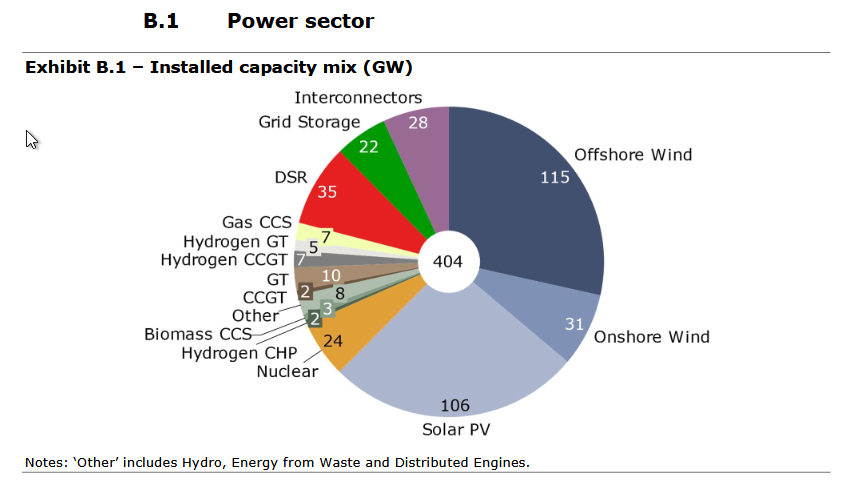
In January 2026 DESNZ raised its 2040 offshore wind levelised-cost forecast from £51/MWh to £96/MWh. The Climate Change Committee’s Seventh Carbon Budget still assumes £37/MWh.
Two official bodies, same technology, same year, a factor of 2.6 apart — and the cheaper number carries the legal weight.
Which is right, and how would we know? Primary sources please.
It is supposedly optimized for cost, but it uses the DESNZ projected costs for renewables, published prior to 2023. If that analysis were to be reproduced, optimizing for costs using the real costs of wind and solar, it would favour nuclear and would have a much smaller wind and solar component, if any.
If the CCC were to update its wind power cost assumptions, a revised analysis would show that the country has been progressing down the wrong path for the last 25 years. That would probably bring about an end to the CCC and all the hangers-on who have earned an income from this Net Zero shenanigans.
Welcome, and thanks for digging out the CCC’s own modelling. If the AFRY “least-cost” grid was built on cost numbers from before 2023, that is the crux of this thread. You say a rerun at today’s costs would favour nuclear. Which cost figures would you put in, and from which source? (I take it your $44 is £44/MWh, from DESNZ’s 2023 generation costs report?)